
Machine Quilting 101
Machine Quilting 101: Where to Start After Your Quilt Top Is Finished
A simple guide to making your quilt sandwich, choosing thread, and trying four machine quilting styles on your next project.
Quick Takeaways
Machine quilting starts after your quilt top is finished and begins with building a three-layer quilt sandwich. From there, you can try straight-line quilting, echo quilting, meandering, or custom free motion quilting depending on the look you want.
This post walks through four sample quilting approaches and highlights thread choices that add texture, movement, and visual interest to your quilt.
Table of Contents
Today we’re talking machine quilting—what to do after your quilt top is finished. Once your quilt top is complete, the next step is machine quilting, and that can feel like a big topic when you’re deciding how to begin.
Machine quilting covers a wide range of techniques, so this is a good place to slow down, look at the basics, and try a few approaches before choosing what works best for your project.
Everything You Need to Know in One Video
I created a YouTube video that starts with making a three-layer quilt sandwich and then walks you through how to straight line quilt or free motion quilt your next project.
Watch the YouTube video here and start planning your next quilting project!
Picking Thread and Choosing a Quilting Design
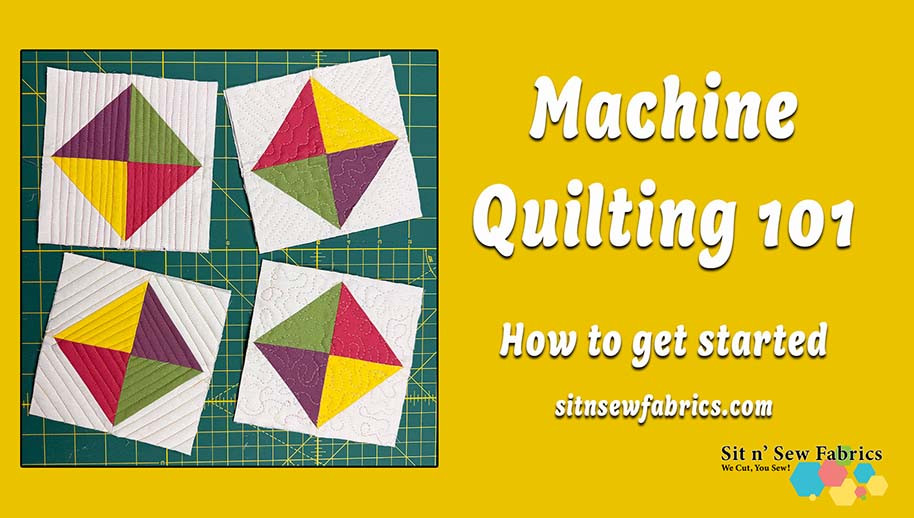
Where do you begin? I created four different samples to show you how, including close-up video quilting. Here’s a quick overview of what I cover in the Machine Quilting 101 video.
1. Straight-Line Quilting

Using Sorbet variegated thread (Col. 517) and a walking foot, this sample creates simple texture across the length of the square. The thread color adds a subtle pop that works with the block design.
2. Straight Line Echo Quilting

Follow the lines of your quilt block to create an integrated design. The Sunrise variegated thread (Col. 511) blends nicely on the colored triangles while adding extra design interest on the white background.
3. All Over Meander

This is an ideal introduction to free motion quilting. A meander is a gentle wander across the quilt top with a few loops added along the way. Soft Ice variegated thread (Col. 505) adds a soft hint of color.
4. Custom Free Motion

As you get more comfortable with free motion quilting, you can choose stitching motifs that fill in the shapes of your quilt block. In this sample, White thread (Col. 502) blends into the background while standing out on the colored sections.
Four Samples to Inspire Your Next Quilt
Four different quilting approaches, each with its own texture and personality. Which one would you try first?

Check out the Machine Quilting 101 YouTube video for step-by-step details on creating the quilting shown in these four samples, then try them yourself.
Ready to Start Quilting?
Watch the video, choose your quilting style, and pick the thread colors that fit your next project.
Go to the VideoMachine Quilting FAQ
What happens after I finish my quilt top?
The next step is machine quilting, which begins by making a three-layer quilt sandwich and then choosing how you want to quilt the project.
What is a good first free motion quilting design to try?
An all over meander is a good starting point because it is a gentle wandering design with a few loops, making it a beginner-friendly introduction to free motion quilting.
How does thread choice affect the finished quilt?
Thread can blend into the fabric for a softer effect or add contrast and texture that makes the quilting design stand out more clearly.
Should I try straight-line quilting before custom free motion?
That’s a smart place to start. Straight-line quilting and echo quilting help build confidence before moving into more detailed custom free motion fills.
Recent Posts
-
Machine Embroidery Needles: Sizes, Types & How to Choose
Machine Embroidery Needle Guide Machine Embroidery Needles Explained: Sizes, Points & How to Cho …Sep 10th 2026 -
Scrappy Pumpkin Patch Wall Quilt Tutorial with 5" Squares
Free Fall Quilt Tutorial Scrappy Pumpkin Patch Wall Quilt Tutorial with 5" Squares Key Takeaways: …Sep 2nd 2026 -
12 Spooky-Cute Designs & Projects to Stitch
Halloween Embroidery Inspiration 12 Halloween Embroidery Ideas for Spooky-Cute Projects Key Takea …Aug 10th 2026