
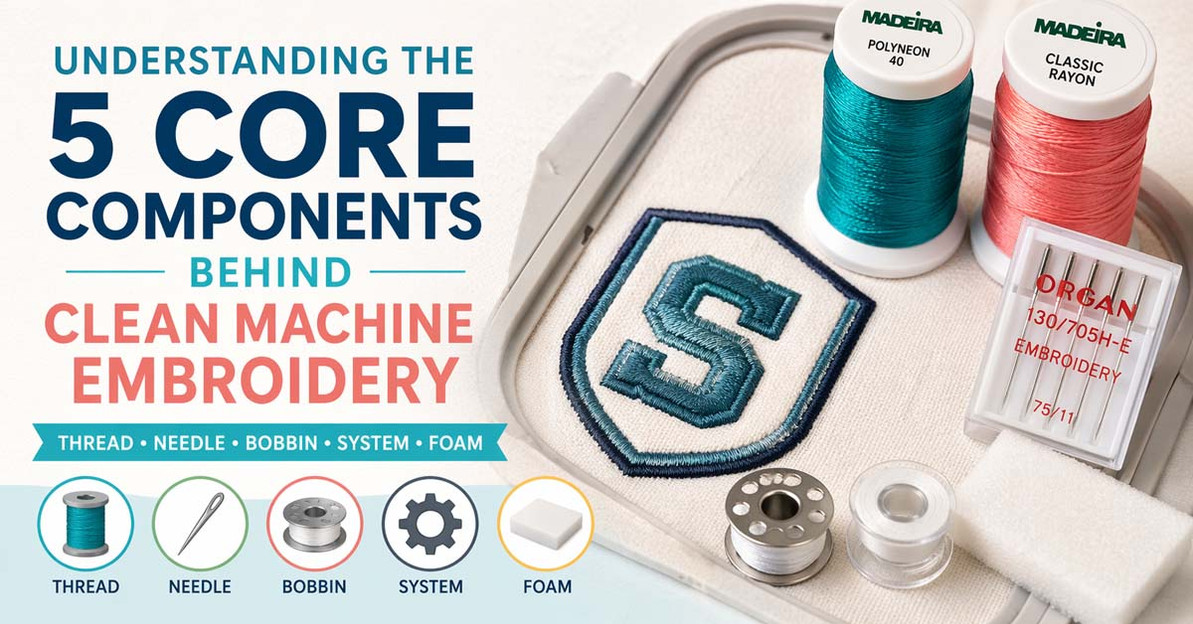
Understanding the 5 Core Components Behind Clean Machine Embroidery
Table of Contents
Key Takeaways
Clean machine embroidery depends on several components working together correctly, not just the machine or design file alone. Thread type, needle condition, bobbin consistency, and specialty materials each affect stitch quality in different ways.
Understanding how these core components interact can help reduce common issues like thread breaks, uneven stitching, and poor coverage.
Clean embroidery results do not come from a single product or setting. They come from a combination of components working together in a balanced way. When one part of the setup is mismatched or worn, the result often shows up as thread breaks, looping, inconsistent tension, poor coverage, or uneven stitch quality.
This guide looks at five foundational components behind clean machine embroidery and explains how each one contributes to a more consistent result.
1. Thread Selection
Thread affects both the appearance of the finished design and how smoothly the embroidery process runs. Two common embroidery thread types are polyester and rayon, and each has different characteristics.
| Thread Type | General Characteristics | Common Use Considerations |
|---|---|---|
| Polyester | Known for durability, colorfastness, and resistance to frequent laundering. | Often selected for items that need long-term wear or repeated washing. |
| Rayon | Known for a soft, smooth finish and a bright, high-sheen appearance. | Often chosen when visual finish and shine are a priority. |
In practical terms, thread choice should match the intended use of the finished item. A design that will be worn and washed frequently may call for a different thread choice than one created mainly for decorative appearance. For example, a polyester option such as Madeira Polyneon is commonly associated with durability, while a rayon option such as Madeira Classic Rayon is often chosen when sheen and finish are the priority.
Main point: Thread selection affects both stitch performance and the look of the final embroidery.
2. Embroidery Needles
The needle plays a direct role in how thread passes through fabric. Embroidery needles are designed differently than general sewing needles because they need to support smooth thread flow at faster stitching speeds.
A proper embroidery needle helps reduce unnecessary friction on the thread and supports cleaner stitch formation. When the wrong needle is used, or when the needle has become worn, common issues may include fraying, thread breaks, skipped stitches, or rough-looking embroidery. Products such as Organ brand embroidery machine needles are specifically intended for embroidery applications where smooth thread handling matters.
- Needle condition affects stitch quality.
- Worn needles can contribute to avoidable embroidery problems.
- Matching needle choice to thread and fabric helps improve consistency.
Main point: A correct, fresh embroidery needle supports smoother stitching and helps reduce stress on the thread.
3. Bobbin Consistency
Bobbin thread is not the most visible part of embroidery, but it is essential to stitch balance. The top thread and bobbin thread work together to form a stable stitch.
When bobbin tension is inconsistent, the result can show up in several ways, including looping, poor stitch balance, or uneven embroidery on the back and front of the design.
Prewound bobbins are often used because they provide uniform winding and help reduce variation from one bobbin to the next. A product such as polyester prewound Style 15/A bobbins fits into that category. User-wound bobbins can work well too, but they depend more heavily on consistent winding practices.
Main point: Consistent bobbin performance helps support consistent stitch quality.
4. How the Components Work Together
Thread, needle, and bobbin do not work independently. They function as a system, and the quality of the final result depends on how well those parts work together.
- The needle creates the path through the fabric.
- The top thread forms the visible embroidery.
- The bobbin thread helps lock the stitch underneath.
If one part of that system is mismatched, the problem may show up somewhere else. For example, a worn needle can lead to thread issues, while inconsistent bobbin performance can affect stitch formation even when the top thread appears correct.
That is why troubleshooting embroidery usually works best when the setup is evaluated as a complete system rather than focusing on only one component at a time.
Main point: Clean embroidery depends on component compatibility, not just individual product quality.
5. Using 3D Puff Foam
3D puff foam is used to create raised embroidery with added dimension. It is commonly associated with bold lettering, cap designs, and styles where a more elevated visual effect is desired.
Foam is placed on top of the fabric and stitched over as part of the design process. After stitching, the excess foam is removed, leaving the raised effect in the stitched areas. Materials such as 3D puffy foam are used for this effect.
Successful use of puff foam depends on more than the material itself. The design must be suited for it, and the stitch coverage needs to be sufficient to shape and conceal the foam properly.
Main point: 3D puff foam adds dimension, but clean results depend on appropriate design setup and coverage.
Final Thoughts
Clean machine embroidery is the result of multiple fundamentals working together. Understanding thread selection, needle performance, bobbin consistency, component compatibility, and specialty materials can make it easier to identify problems and build a more reliable embroidery setup over time.
Frequently Asked Questions
What causes uneven embroidery results?
Uneven results can come from several factors, including worn needles, inconsistent bobbin performance, unsuitable thread choice, or components that are not working well together.
Why does thread choice matter in machine embroidery?
Thread affects both the appearance of the design and how the embroidery performs during stitching. Different thread types are often chosen for different end uses.
Why is the bobbin so important if it is mostly hidden?
The bobbin thread helps form and balance each stitch. Even though it is less visible, it has a major effect on stitch consistency.
Can 3D puff foam be used with any embroidery design?
Not every design is equally suited for puff foam. Clean results usually depend on the design being structured to cover and shape the foam correctly.
Recent Posts
-
Machine Embroidery Needles: Sizes, Types & How to Choose
Machine Embroidery Needle Guide Machine Embroidery Needles Explained: Sizes, Points & How to Cho …Sep 10th 2026 -
Scrappy Pumpkin Patch Wall Quilt Tutorial with 5" Squares
Free Fall Quilt Tutorial Scrappy Pumpkin Patch Wall Quilt Tutorial with 5" Squares Key Takeaways: …Sep 2nd 2026 -
12 Spooky-Cute Designs & Projects to Stitch
Halloween Embroidery Inspiration 12 Halloween Embroidery Ideas for Spooky-Cute Projects Key Takea …Aug 10th 2026