null
Mastering Monogramming

Mastering Monogramming
Embroidery Tips & How-To
Monogramming Basics
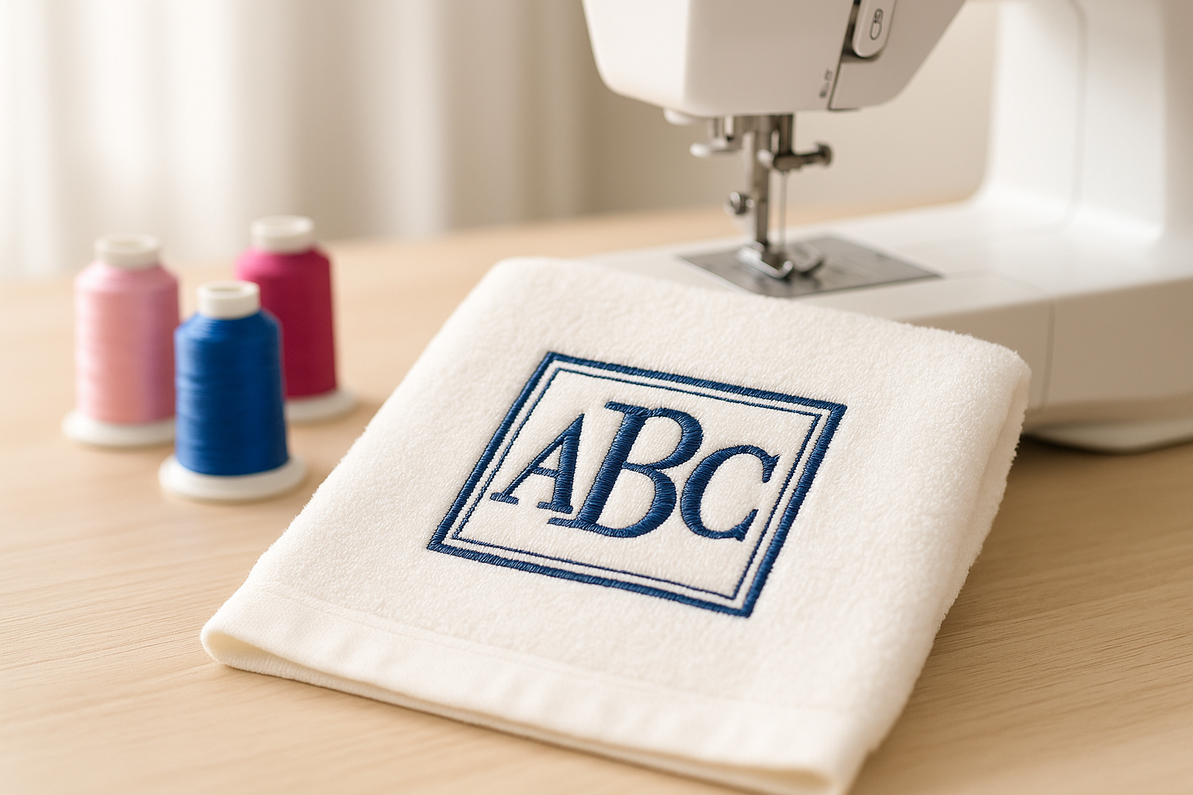
Personalizing gifts and garments with machine-stitched monograms is a satisfying way to add your signature style. Whether you’re embellishing towels for a wedding, adding initials to a baby blanket, or decorating a tote bag, strong results come from a little planning and the right materials.
Tip: Stitch a quick test on similar fabric with the same stabilizer and thread first — then move to the real item.
Quick definitions
A monogram combines two or more letters into one emblem (often with the surname initial larger in the center for three-letter styles). A cipher arranges initials together typically without intertwining them (exceptions to be made depending on the font type). Both work beautifully with modern machine embroidery.
Fast win: Tiny lettering looks sharper when you slow your machine down and stabilize well.
Monogramming Basics
 
Start Here
Planning your design
  • Pick a style and font: Decide whether you want classic script, block serif, modern sans-serif, or interlocking styles. Test sizes in your software.
  • Measure the placement area: Shirts/robes often look best around 3–5" tall; towels and linens may be larger. Leave space from seams and hems.
  • Print or use templates: Use crosshair templates to mark center lines — hooping alignment gets much easier.
 
Materials
Stabilizer (Backing & Topping)
A good stabilizer prevents puckering and distortion, and topping helps keep stitches from sinking. SNS carries tearaway, cutaway, mesh stabilizers and water-soluble topping in several weights and sizes.
  • Tearaway stabilizer: Best for stable woven fabrics like cotton or linen. Available in medium (2.5 oz) and lightweight (1.5 oz).
  • Cutaway stabilizer: Great for knits and performance fabrics. Lightweight options are especially comfy for children’s garments.
  • Peel-and-stick stabilizer: Ideal for hard-to-hoop items (totes, sleeves, cuffs). Stick first, then stitch with confidence.
  • Water-soluble topping: Use on terry cloth, fleece, and textured fabrics to keep stitches from sinking.
  • Mesh / no-show stabilizer: Lightweight support that won’t show through light fabrics — perfect for delicate knits.
Tip: Match stabilizer weight to fabric weight and stitch count. Heavier stitch counts typically need stronger stabilizer support.
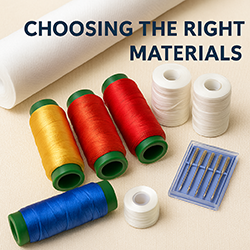
Choosing the Right Materials
 
Thread
Thread
Quality thread matters for crisp monograms and long-lasting color. SNS stocks polyester, rayon, and metallic embroidery threads from trusted brands like Madeira & Coats.
  • Polyester (e.g., Madeira Polyneon): Durable, colorfast, and ideal for frequently washed items.
  • Rayon (e.g., Madeira Classic): Beautiful sheen and a classic glossy finish.
  • Thread weights: 40 wt is standard. For tiny lettering (under 1/4"), use 60 wt micro thread with a 65/9 or 70/10 needle and slower speed.
 
Setup
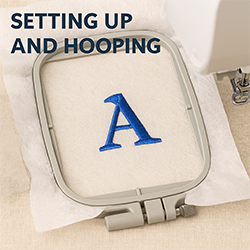
Setting up & hooping
Proper hooping helps keep your monogram centered and prevents fabric from slipping. Follow these steps:
  1. Prepare your fabric: Pre-wash and press when possible. Mark the monogram center with a water-soluble marker.
  2. Cut stabilizer: Cut slightly larger than your hoop. For small items, peel-and-stick backing makes “floating” easier.
  3. Hoop correctly: Keep fabric taut but not stretched. If hooping is difficult, hoop stabilizer only and secure fabric with temporary adhesive or peel-and-stick.
  4. Use templates and crosshairs: Align your marked lines with hoop center marks before stitching.
Setting Up and Hooping
 
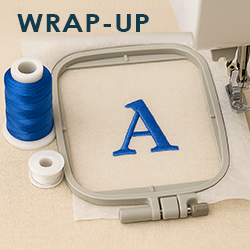
Wrap-Up
You’ve got this!
Monogramming with an embroidery machine is a fun way to personalize gifts and garments. With careful planning, the right stabilizer, quality thread and needles, and solid hooping habits, your monograms will look professional every time. Happy stitching!
Conclusion
Jan 29th 2026 Sit n' Sew Fabrics

Recent Posts